How to Choose a 24V DC Diaphragm Pump for Your Project
By TG
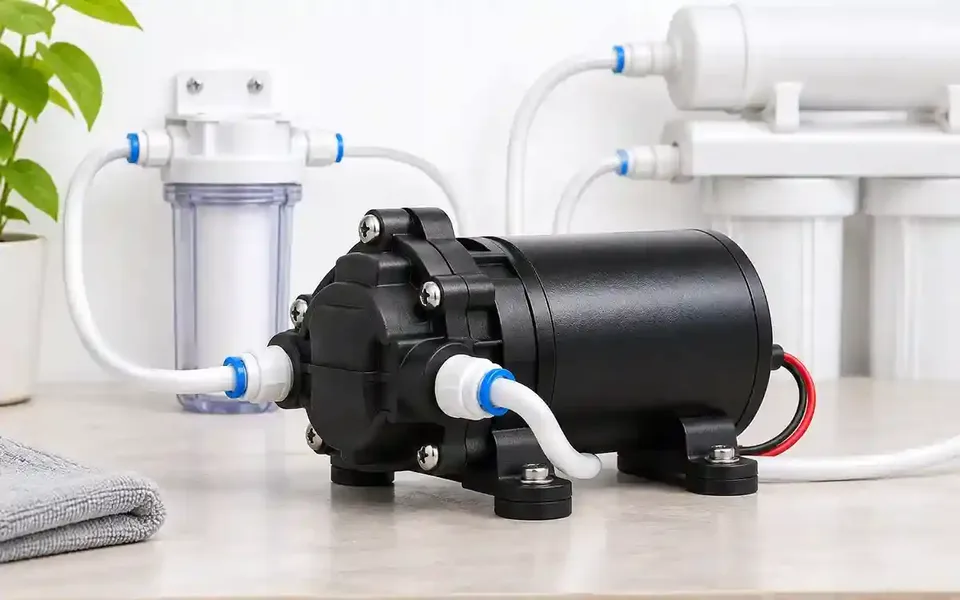
A small diaphragm pump can help move water through a system that needs extra pressure. But choosing one takes more than looking at its voltage. You also need to check the flow, pressure, fittings and power supply.
This guide explains the basics using a reverse osmosis (RO) water filter as an example. Check the pump and system instructions before you buy or install any part.
Shop the 24V DC Diaphragm Booster Pump
What does a diaphragm pump do?
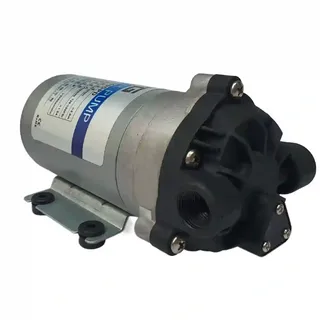
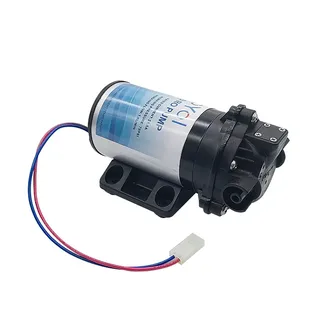
A diaphragm pump uses a moving flexible part to draw in and push out liquid. In a compatible RO filter, a booster pump can raise the water pressure going to the filter membrane. The right pressure depends on the membrane and the rest of the system.
1. Start with your project
Write down what you want the pump to do. Is it a replacement for an RO filter pump, or part of a new water system? Note the system model and the details on the old pump. A 24V label alone does not mean two pumps are interchangeable.
The Top Gadgets 24V DC booster pump is listed for RO water filtration. For another use, such as misting, check the pump, water and equipment requirements before ordering.
2. Check flow and pressure together
Flow is the amount of water moved over time, often shown in litres per minute (LPM). Pressure describes the force in the water line, often shown in PSI.
Check the flow your system needs at its working pressure. A pump's free-flow figure is measured with little or no outlet pressure; it does not tell you the flow you will get in an installed system. Ask for the performance curve or the flow at your required pressure if it is not provided.
The product listing gives a flow of 1.8 LPM and a working pressure of 90 PSI. It does not establish that the pump delivers 1.8 LPM at 90 PSI. Confirm the operating point and pressure limits for your system before buying.
3. Match the 24V DC power supply
Use a suitable 24V DC supply with the correct connector and polarity. It must provide enough current for the pump, including its starting needs. Check the pump label and the power supply instructions. The product listing states a maximum current of 1.2 A; confirm the label on your actual pump.
Never connect a 24V DC pump directly to household mains power. Keep electrical connections dry. If you are unsure about wiring, ask a qualified installer.
4. Check the water and fittings
Confirm that the pump materials suit the water and that the water temperature and inlet pressure are within the pump's limits. For drinking-water systems, check that the parts in contact with water are suitable for that use.
Measure the inlet and outlet connections and tubing. Check both the size and fitting type. Do not force a tube into a fitting that does not match. If the listing does not give the details, ask before ordering.
5. Plan a safe installation
Switch off the power and water supply before working on the system.
Mount the pump as directed and follow its inlet and outlet markings.
Use the filter, pressure controls and protective devices specified for your system.
Do not block the outlet or exceed the pressure rating of any component. A pressure switch alone should not be assumed to provide all required protection.
Check for leaks after installation. Follow the manufacturer's instructions on priming, running dry and operating time.
Water and electricity can be a dangerous combination. If you are not confident about the installation, use a qualified technician.
Which pump should you choose?
For a compatible RO system, compare the 24V DC booster pump with your filter's requirements. Have the system model, current pump label, tube size and required working pressure ready. Top Gadgets can help you check the details before you order.
Frequently asked questions
Will any 24V pump fit my RO filter?
No. Voltage is only one part of the match. Check flow at working pressure, electrical current, fittings, materials and the filter maker's requirements.
Does a higher maximum pressure mean a better pump?
Not always. The pump must meet the pressure your system needs without exceeding the limits of the other parts. Check the complete system and its controls.
Can I use this pump for a misting system?
Only if its flow, pressure, water and connection requirements match the misting system. Ask for the pump's performance information and check the nozzles' requirements first.