How to Use Copper Tape for EMI Shielding: A Beginner’s Guide
By TG
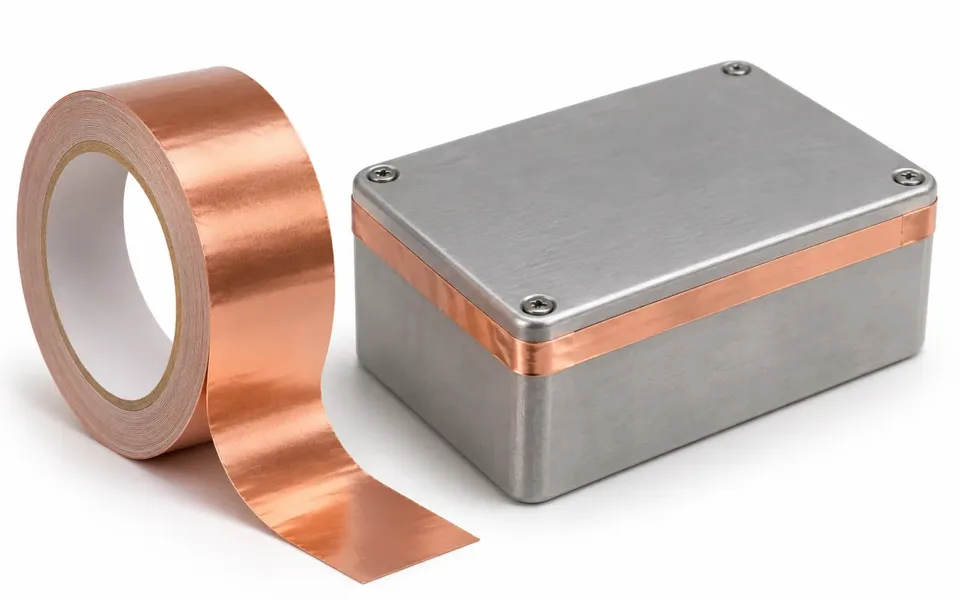
Does your electronics project pick up unwanted noise? Electromagnetic interference, or EMI, may be one cause. Copper foil tape can help form part of a shield around some electronics.
This guide explains how to use copper tape on a small, low-voltage project. Results depend on the tape, the enclosure and the source of the interference.
What is EMI?
EMI is unwanted electrical or radio-frequency noise. It can come from sources such as motors, switching power supplies and nearby devices. It may affect how another device works.
Not every fault is caused by EMI. A loose wire, a poor power supply or a faulty part can cause problems too. Check these first.
How can copper tape help?
A conductive metal shield can reduce some interference entering or leaving an enclosure. Copper tape can help cover a small gap or join conductive areas. For some projects, it can line a non-metal enclosure.
Shielding is not simply a matter of adding a strip of tape. Gaps, seams, cable openings and electrical contact all matter. The noise frequency and the design of the device matter too. Copper tape does not guarantee a fix or a specific result.
Choose the right tape
All copper foil conducts electricity. The adhesive under it may or may not conduct. Conductive adhesive can help make contact through the sticky layer, including at overlaps. With non-conductive adhesive, an overlap may not have a reliable electrical connection.
Check the tape’s product details before you start. Tape width, surface condition and the type of adhesive affect how easy it is to apply and connect. Do not assume that every copper tape is suitable for every job.
What you need
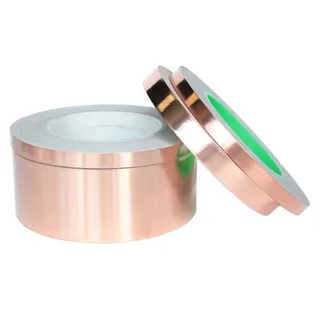
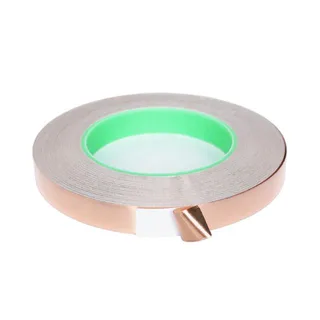
Copper foil tape suitable for your project
Scissors or a suitable cutter
A clean, dry cloth
A multimeter with a continuity or resistance setting
A small, unpowered, low-voltage project enclosure
How to apply copper tape
Turn off and disconnect the device. Remove its power source. Work only on a low-voltage project that is safe to handle.
Plan the shield. Identify the enclosure surfaces and seams you need to cover. Keep tape clear of circuit boards, bare contacts, terminals and moving parts. Do not block vents or cause overheating.
Clean and dry the surface. Follow the enclosure and tape makers’ cleaning instructions. Dirt can prevent good adhesion and contact.
Cut and apply the tape. Peel away the backing. Press the tape down smoothly. Avoid wrinkles and loose edges. If you use several strips, overlap them and check that the overlaps make electrical contact. Do not rely on overlap alone if the adhesive is not conductive.
Check for contact. With the device still disconnected, use a multimeter to check continuity across the foil and each seam. Also check that the tape has not made an unwanted connection to the circuit.
Close and test the project. Inspect the enclosure before reconnecting power. Compare how the project works before and after. A continuity check can find an open seam, but it cannot prove that EMI shielding will work at the needed frequency.
Grounding: Some designs need a shield connected to a specified chassis or ground point. Others use a different arrangement. Follow the device maker’s instructions. Do not connect tape to mains earth or alter safety grounding unless a qualified professional confirms the correct method.
Common mistakes
Leaving gaps: Open seams and cable holes may let interference through.
Assuming the glue conducts: Check the adhesive specification and test each joint.
Shorting a circuit: Loose copper can touch contacts and damage a device. Keep foil away from live parts.
Blocking ventilation: Leave cooling openings clear. Never use tape as a substitute for a rated safety cover.
Expecting one strip to solve every issue: Find the noise source and test the complete setup.
Frequently asked questions
Does copper tape block all EMI?
No. Its effect depends on the type and frequency of interference, the enclosure, gaps and electrical connections. For a critical application, the complete design needs suitable testing.
Is all copper tape adhesive conductive?
No. Some copper tapes use conductive adhesive; others do not. Check the specification for the tape you buy.
Can a multimeter confirm that my shield works?
It can help check whether two points are electrically connected. It cannot measure the shield’s effectiveness against EMI. That requires a suitable test for the application.
Find copper tape for your project
Choose your tape based on the surface, width and electrical contact your project needs. If you are unsure, contact us with details of your application.
For more ideas, read our guide to uses of conductive copper tape.