How to Choose a Spray Nozzle for Your Job
By TG
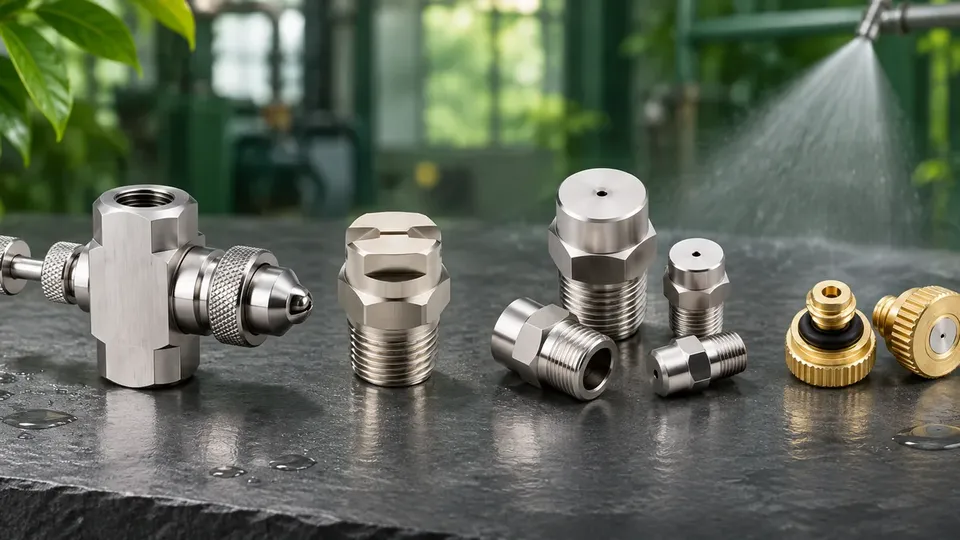
The right spray nozzle can make a big difference. It helps put liquid where you need it, in the shape you need. But with so many sizes and types, choosing one can feel confusing.
Start with the job. Are you cleaning a surface, cooling a space, or spraying water over an area? Then check the spray pattern, flow rate, pressure, connection and material.
This guide will help you narrow down your choice.
1. Start with the job
Think about what you want the spray to do and where it needs to go.
| Your job | A type to consider | What to check |
|---|---|---|
| Wash or rinse a surface | Flat fan nozzle | Coverage width, distance and pressure |
| Spray over a round area | Full cone nozzle | Spray angle and even coverage |
| Spray liquid inside a wet scrubber | Spiral nozzle | Flow, pressure, coverage and material |
| Make a fine mist for cooling or humidity | Misting or atomizing nozzle | Droplet size, water supply and pressure |
| Make a fine spray using air and liquid | Two-fluid nozzle | Air supply, liquid supply and their pressures |
These are starting points. The best choice still depends on the liquid, equipment and conditions at your site.
2. Choose a spray pattern
The spray pattern is the shape the liquid makes as it leaves the nozzle.
Flat fan
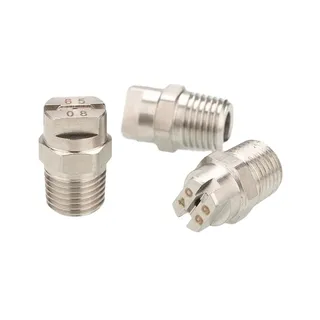
A flat fan nozzle makes a wide, thin sheet of spray. It can be useful for washing and rinsing a surface. The width of the covered area depends on the spray angle and the distance from the nozzle.
See our flat fan spray nozzle.
Full cone
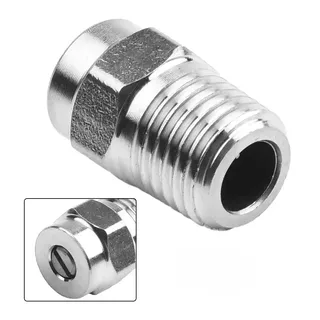
A full cone nozzle sprays over a round area, including the centre. It can be useful when you need coverage across an area, such as in some cooling or rinsing jobs.
See our full cone jet nozzle.
Spiral nozzles for wet scrubbers
In Pakistan, factories use wet scrubbers to help control air pollution from boilers and other processes. These systems are used in textile mills, rice mills, sugar mills and chemical factories. Top Gadgets has supplied hundreds of spiral nozzles for wet scrubber applications.
In a spray-type wet scrubber, nozzles spread liquid into the exhaust gas. The liquid can help capture dust and other particles. Some scrubbers also remove certain gases when the right liquid and system are used. The result depends on the full scrubber design and how it is operated, not the nozzle alone.
A spiral nozzle can be a useful choice for spraying liquid inside a wet scrubber. Before ordering, check the required flow rate, working pressure, spray angle and pipe connection. Also check that the nozzle material suits the liquid and temperature. If the scrubber uses recirculated water, consider the particles in the water and the cleaning the system will need.
See our spiral jet nozzle. For a new system or a replacement, share the scrubber details with us and check the choice with your system designer.
Fine mist or fog
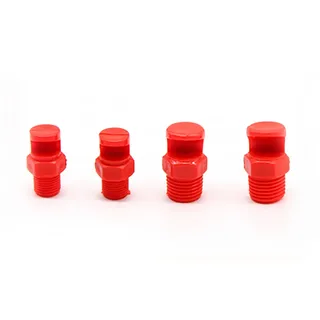
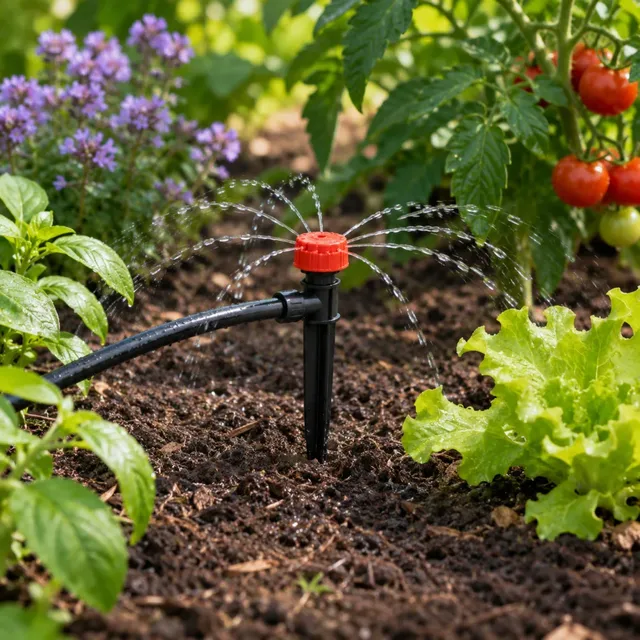
Misting nozzles break water into small drops. They can be used for jobs such as outdoor cooling or adding moisture to the air. The result depends on the nozzle, pressure and surroundings. Wind can carry mist away, and surfaces may still get wet.
See our anti-drip misting nozzle and high-pressure fog nozzle. These are different products, so check the pressure and connection for the one you choose.
In Pakistan, we supply misting nozzles and systems for poultry and dairy farms, gardens, open spaces, hotels and other places. The right setup depends on the size of the area, the water supply and how the space is used. For animal housing, plan the system with someone familiar with the animals’ needs and ventilation.
For a complete setup, explore our misting system for homes, patios, restaurants and farms.
Air and liquid spray
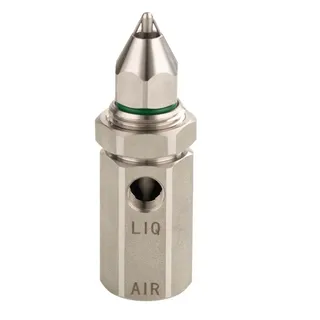
Some atomizing nozzles use compressed air as well as liquid to make a fine spray. You will need a suitable air supply and liquid supply. Check the requirements for both before ordering.
See our air and water dry fog nozzle.
3. Check the spray angle and distance
The spray angle helps determine how wide the spray becomes. A wider angle usually covers more width at the same distance. Moving the nozzle farther away also changes the covered area and may reduce the force hitting the surface.
Measure the distance between the nozzle and the area you want to spray. If you use several nozzles, check their spacing too. Test the setup where possible. A spray that looks wide enough on paper may leave gaps in use.
4. Match the flow rate to your supply
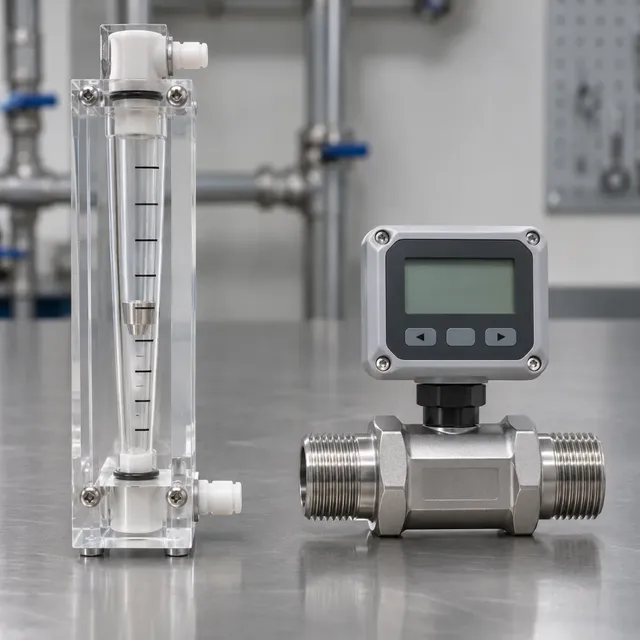
Flow rate is the amount of liquid a nozzle uses in a given time. It is often shown in litres per minute (L/min). The flow rate depends on the nozzle and the pressure at its inlet.
If you plan to use several nozzles, add their flow rates at the planned pressure. Your pump and water supply must support the total flow at that pressure. Also allow for pressure loss in pipes, filters and fittings. A pump's highest flow and highest pressure may not be available at the same time; check its performance chart.
For example, four nozzles that each use 1 L/min at your planned pressure need 4 L/min in total at the nozzles. Your pump must provide that flow at enough pressure to account for the rest of the system. This is an example, not a specification for a particular product.
5. Check the working pressure
Pressure affects the flow and spray shape. A nozzle may not produce the intended spray if the pressure is too low. Too much pressure can damage parts or make the spray behave differently.
Check the pressure range for the exact nozzle and size you plan to buy. Make sure the pump, pipe, fittings and other parts are rated for the system pressure. Do not assume that all misting nozzles work at the same pressure.
6. Check the connection
The nozzle must fit your pipe or fitting. Before ordering, check:
- The connection size.
- Whether the thread is male or female, or whether it uses a push-fit connection.
- The thread standard, such as BSP or NPT, if applicable.
- Whether you need an adaptor.
Two threads can look similar without forming a safe seal. If you are unsure, share a photo and the measurements with us before ordering.
7. Choose a suitable material
The nozzle must suit the liquid, temperature and working conditions. Brass, stainless steel and plastic each have different properties. The right choice depends on the exact material and the liquid being used.
For chemicals, hot liquids or food-related use, check the manufacturer's compatibility and temperature information for every part that touches the liquid. Do not assume that stainless steel or any other material is suitable for every liquid or food use.
8. Think about water quality and cleaning
Small nozzle openings can clog when water contains dirt or particles. A suitable filter can help, but its size and rating must match the system and nozzle. Follow the nozzle maker's cleaning instructions, and avoid using hard tools that could damage the opening.
If the spray shape changes or the flow drops, check for a blocked or worn nozzle and inspect the filter. Turn off and safely release system pressure before removing parts.
Common questions
Is a smaller nozzle always better for misting?
No. A smaller opening can be more likely to clog. Mist quality also depends on pressure, nozzle design and water quality. Choose a nozzle that matches your system and the result you need.
Can I use any nozzle with my pump?
No. Check that the nozzle's flow and pressure requirements match the pump. Also check the connection and the ratings of the rest of the system.
Does a wider spray angle always cover better?
Not always. A wider spray can cover more width, but the result also depends on distance, pressure and nozzle spacing. Test the spray in your actual setup when possible.
Need help choosing?
Browse our spray nozzles, or contact Top Gadgets with the details below:
- What you want to spray and what the job is.
- The area you want to cover and the distance from the nozzle.
- Your pump's flow and pressure, or its model and performance chart.
- The pipe connection size and type.
- The number of nozzles you plan to use.
We can help you narrow down the options before you order.